
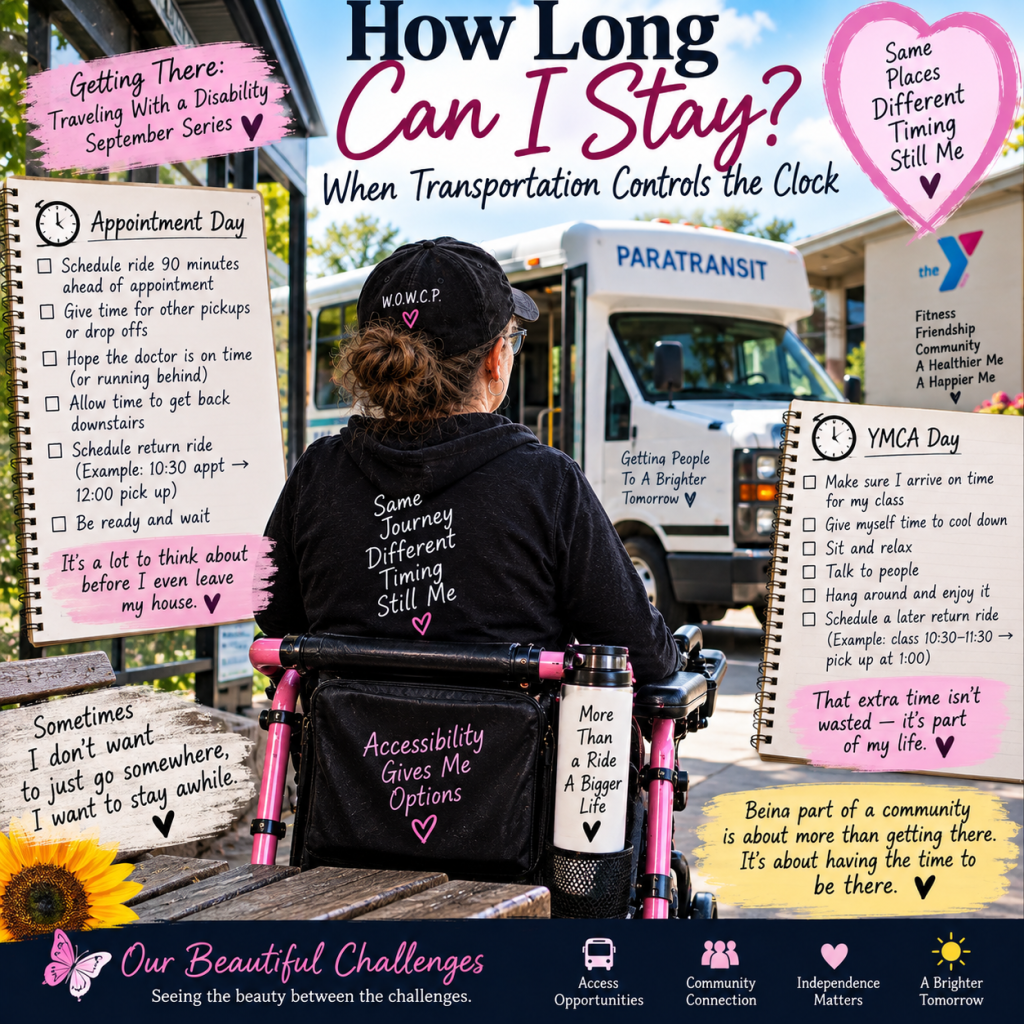
When Transportation Controls the Clock
Getting There: Traveling With a Disability — September Series
When you depend on paratransit, deciding what time you’re going somewhere is only half of the planning. You also have to decide what time you’re coming home—and sometimes you have to make that decision before you’ve even left your house.
When I’m taking paratransit to an appointment, I usually plan my ride about 90 minutes before the appointment. I do this because I want to give myself enough time to get there, especially because I don’t always know if other passengers will need to be picked up or dropped off along the way.
Being late isn’t something I want to worry about.
But then I have to plan the ride home.
How Long Is an Appointment Going to Take?
That’s where things can get tricky.
If I’m going to a doctor’s appointment, I have to think about more than how long the actual appointment is supposed to last.
Is the doctor going to be on time?
Will they be running behind?
How long will I be in the examination room?
How much time will I need afterward to get back downstairs and be ready for my ride?
If my appointment is at 10:30 in the morning, for example, I might schedule my return paratransit ride for noon. That gives me time for the appointment, some extra time in case things are running behind, and enough time to get downstairs and wait for the bus.
But I’m still making an educated guess.
I don’t actually know what time my appointment will finish when I’m scheduling that ride.
That’s something people who can simply get into their own car after an appointment may never have to think about.
Going Somewhere for Fun Is Different
The way I plan transportation also depends on why I’m going somewhere.
Going to the YMCA is different from going to a doctor’s appointment.
If I have a class from 10:30 to 11:30, I need to make sure my ride gets me there with enough time to be ready for class.
But I don’t necessarily want a bus waiting for me the minute class ends.
I might schedule my return ride for 1:00.
Why?
Because I want time to cool down.
I want to sit for a while.
I might want to talk to people.
I want to enjoy being at the YMCA instead of rushing through the experience because I’m worried about catching my ride home.
That extra hour and a half isn’t wasted time.
It’s part of my life.
Sometimes I Want to Hang Around
I think that’s an important part of accessibility that people may overlook.
People with disabilities don’t only need transportation to get to medical appointments.
We need transportation to have lives.
I don’t want every trip outside my home to be about getting somewhere, completing a task, and immediately coming home.
Sometimes I want to hang around.
Sometimes I want to talk to someone after class.
Sometimes I want to sit somewhere and enjoy where I am.
Sometimes I don’t want to be watching the clock.
Being part of a community includes those ordinary moments.
My Time Matters Too
Depending on transportation means I have to think ahead about time in ways that other people may not.
I have to estimate.
I have to leave extra time.
I have to think about what could run late.
And sometimes I have to decide how long I want to stay somewhere before I even know how I’m going to feel once I get there.
I’ve learned to work with that reality.
When I schedule that later ride home from the YMCA, I’m doing more than arranging transportation.
I’m making room in my schedule to enjoy my life.
Because accessibility shouldn’t only get me through the door.
It should give me the opportunity to stay awhile, participate, talk to people, and feel like I belong.
— Marie W.O.W.C.P.
Our Beautiful Challenges
Seeing the beauty between the challenges. ✌️😊💛


Leave a comment